

Choosing a piping material is only the beginning of a complete specification.
Engineers must also consider what the system carries, operating temperature and pressure, corrosion exposure, installation conditions, applicable codes and standards, and the fittings, joints and accessories that make the system complete.
That was the focus of ATS University’s 2026 Pipe Webinar Series, featuring BLÜCHER, a Watts company, SMS, RWC, Charlotte Pipe and the future of specification with ATS SpecTool.
Across all five sessions, one principle stood out:
There is no universal “best pipe”, only the right system for the application.
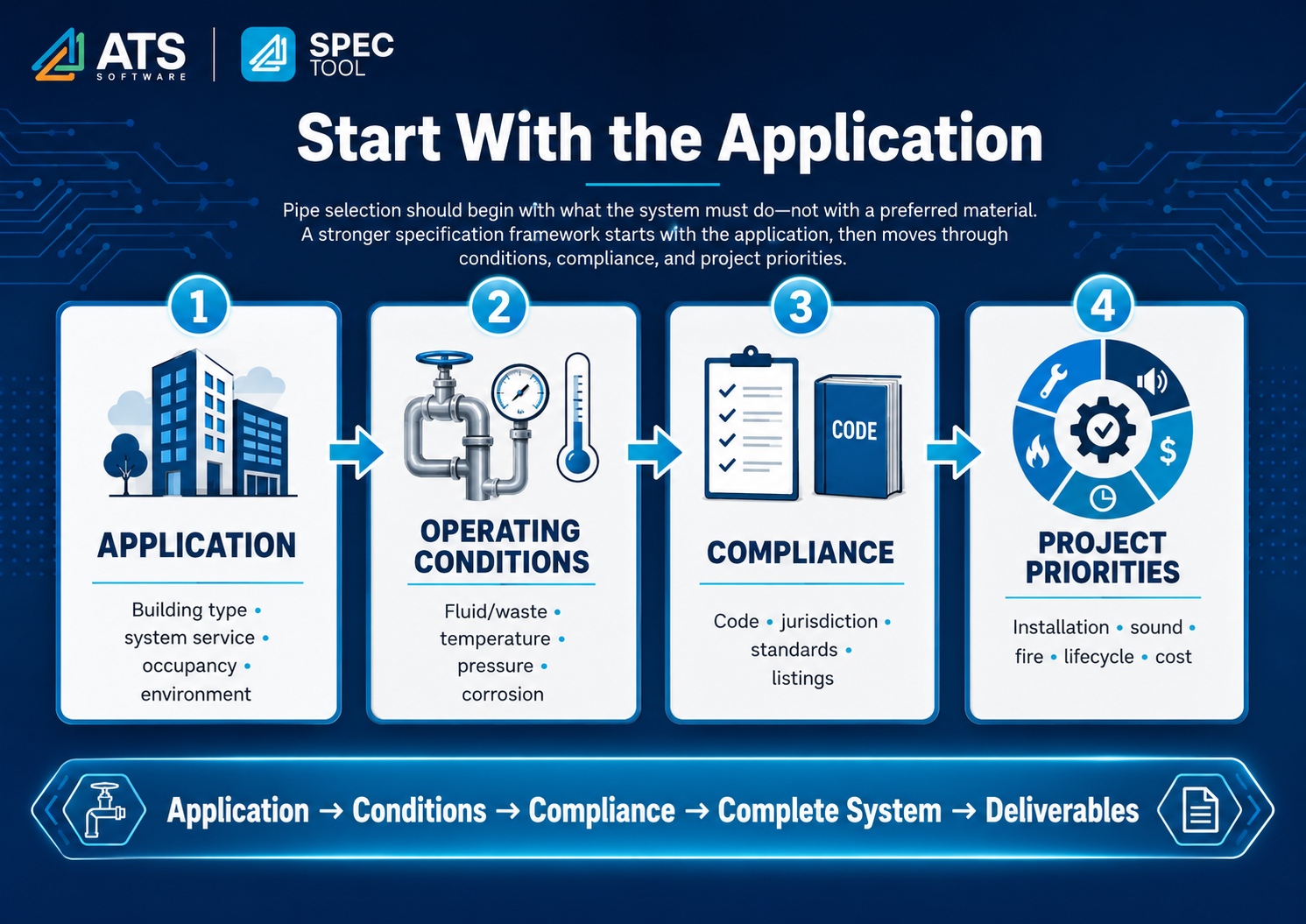
Four Pipe Questions Every Specifier Should Be Asking
Rather than looking at the ATS University Pipe Webinar Series as four unrelated manufacturer presentations, the series can be distilled into four specification questions.
1. Stainless Steel Drainage: Can Installation Be Faster Without Sacrificing Performance?
Push-fit stainless-steel drainage can reduce joining labour, hot-work requirements and handling challenges compared with some conventional systems. It can also be well suited to applications where hygiene, corrosion resistance, temperature exposure and washdown conditions matter.
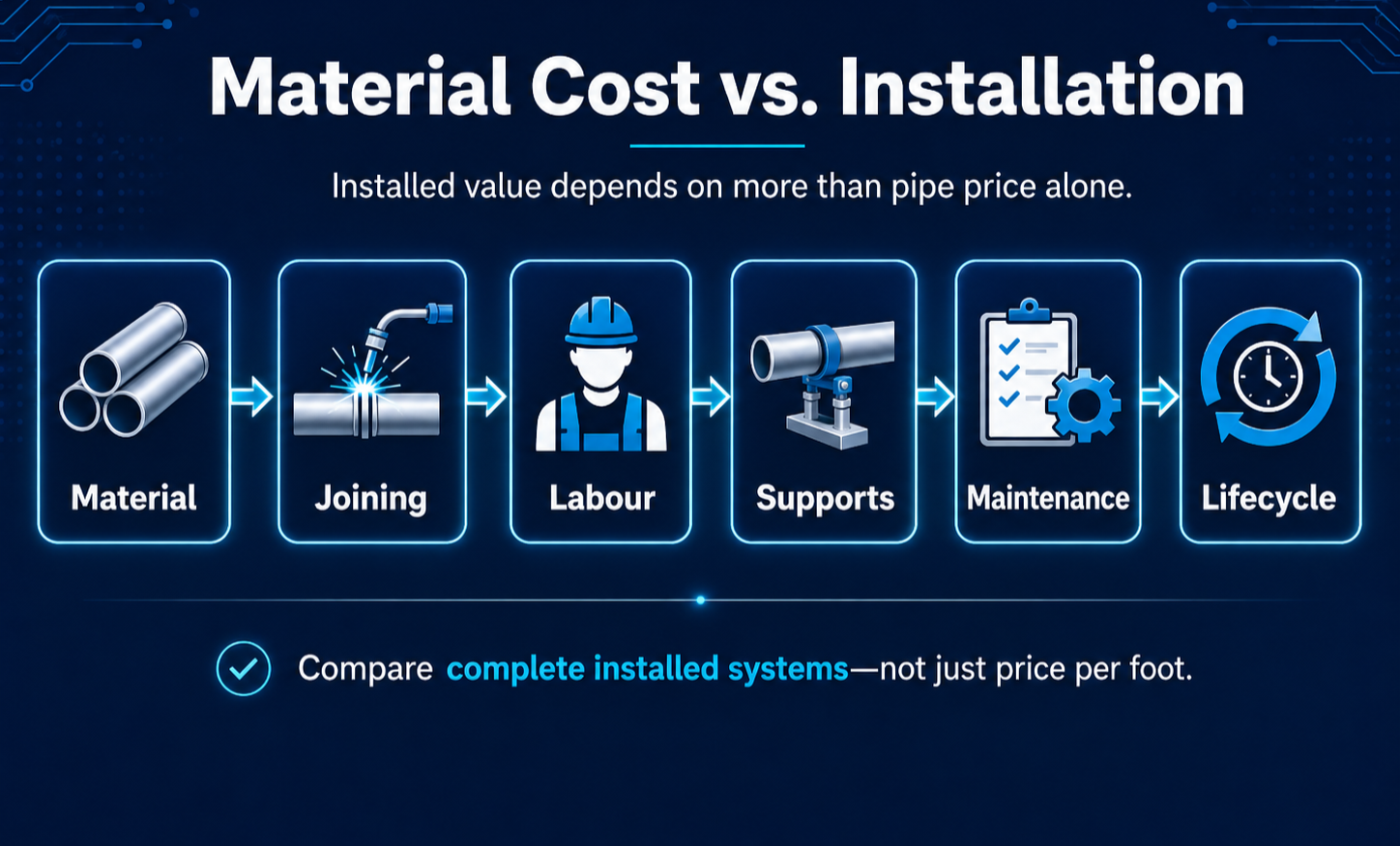
But the larger lesson is economic: material cost alone does not determine installed value. Engineers should evaluate joining, labour, support, handling, maintenance and expected service conditions as part of the complete system.
Initial material cost is not the same as installed cost.
The engineer may need to evaluate:

The right comparison is therefore rarely pipe versus pipe on a price-per-foot basis.
2. Corrosive Waste: What Is Actually Flowing Through the System?
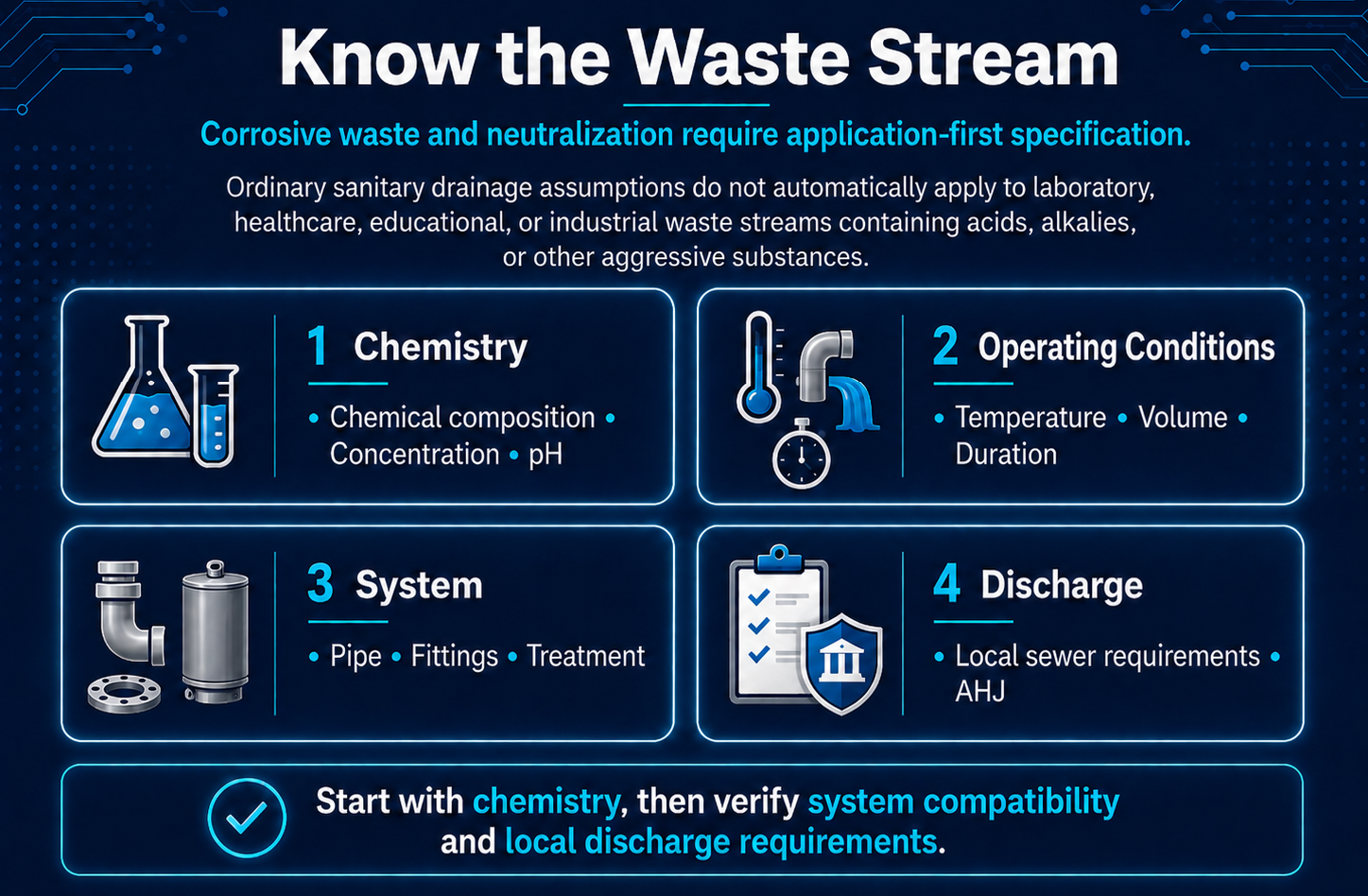
Aggressive waste cannot automatically be treated like conventional sanitary drainage. Compatibility may depend on chemical composition, concentration, temperature and exposure.
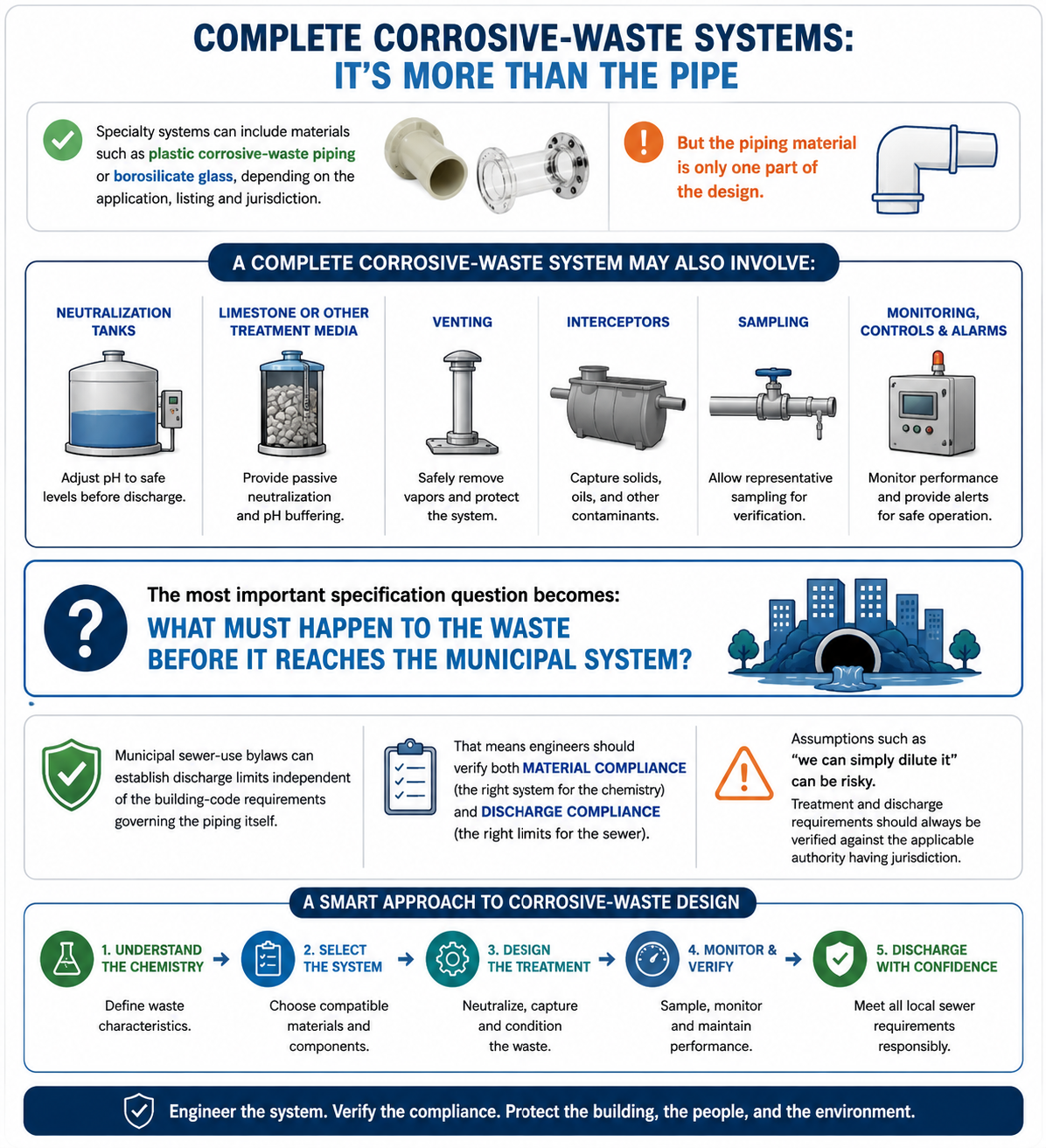
The specification question is therefore not simply “What pipe carries the waste?” but also “What must happen before that waste reaches the municipal system?”
The starting point is chemistry.
Engineers may need to understand:
- Chemical composition
- Concentration
- pH
- Temperature
- Frequency and duration of exposure
- Waste volume
- Local discharge requirements
- Pipe and fitting compatibility
- Treatment requirements
Depending on jurisdiction, specialized materials and standards such as CSA B181.3 may apply. The complete design may also include neutralization tanks, media, venting, interceptors, sampling and monitoring.
3. PEX: Where Is a Flexible Piping System Permitted and Appropriate?
PEX demonstrates why material terminology alone is insufficient. Engineers must coordinate the tubing, fittings, joining method, pressure-temperature ratings, chlorine and UV resistance, supports and relevant listings.
Commercial applications can introduce additional requirements, particularly where piping enters return-air plenums or other regulated spaces.
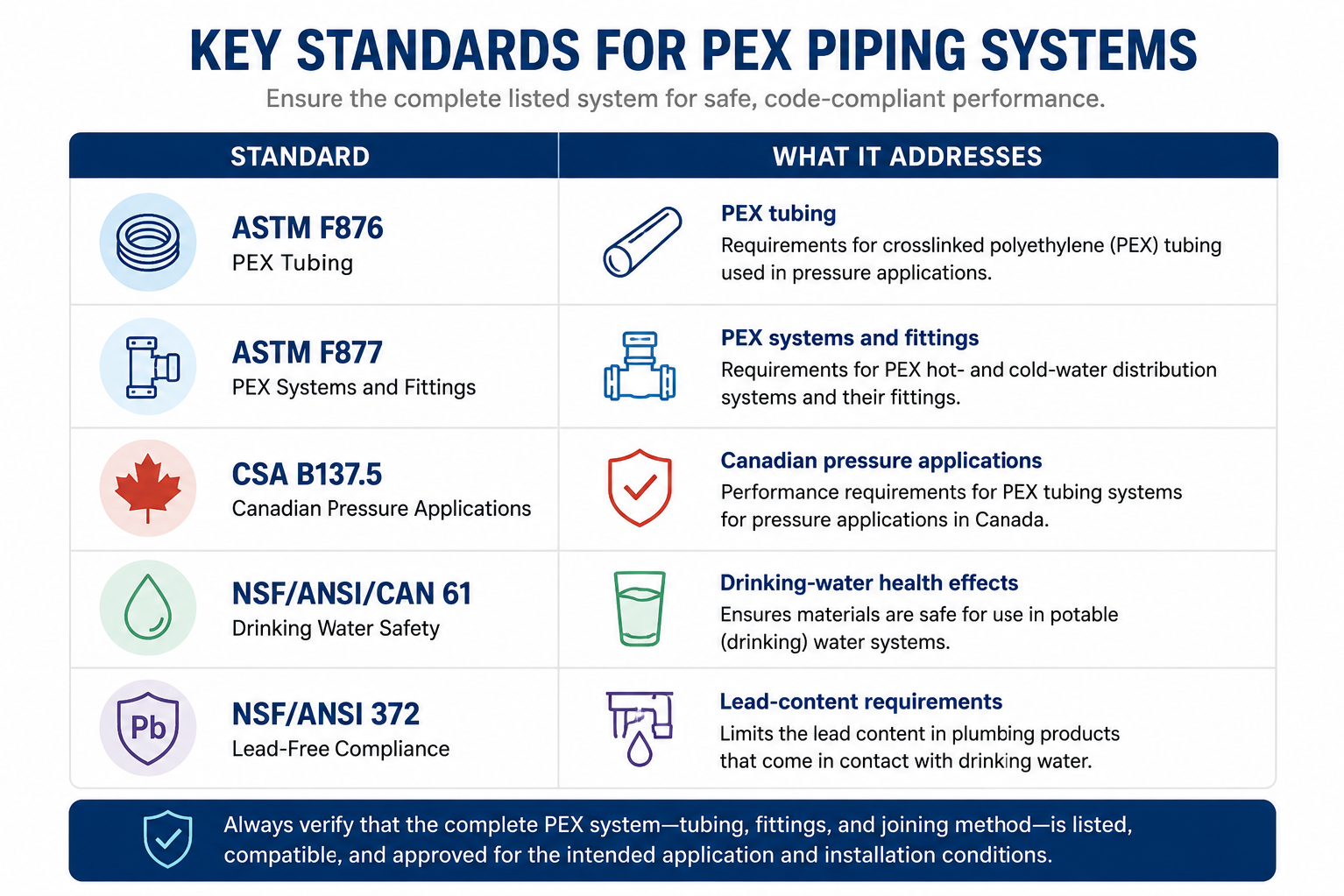
For example, when piping passes through return-air plenums, the engineer may need to verify the specific flame- and smoke-performance listing of the selected product and whether the listing relies on additional insulation or other installation conditions.
The lesson is simple:
Do not specify “PEX” and assume the rest of the system will coordinate itself.
Specify the tubing, compatible fitting and joining system, relevant standards, ratings, installation conditions and accessories required for the application.
4. Cast Iron: Can a Traditional DWV Material Address More Aggressive Conditions?
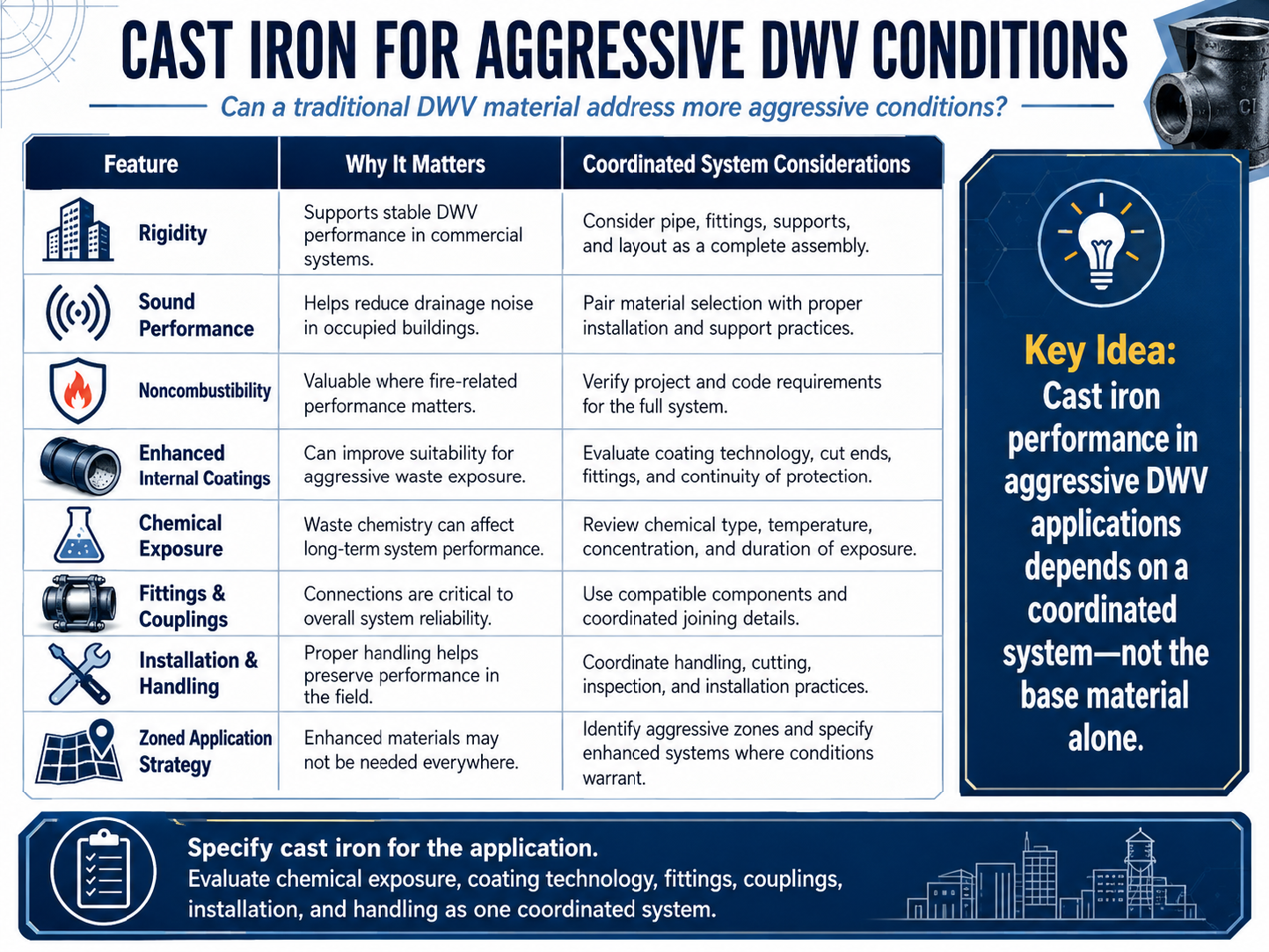
Cast iron remains important in commercial DWV systems for attributes such as rigidity, sound performance and noncombustibility. But aggressive waste conditions can require more than conventional material construction.
Enhanced coating systems demonstrate why engineers should consider chemical exposure, coating technology, fittings, couplings, installation and handling as one coordinated system.
Rather than applying enhanced materials everywhere, engineers may identify aggressive zones and specify them where project conditions warrant.
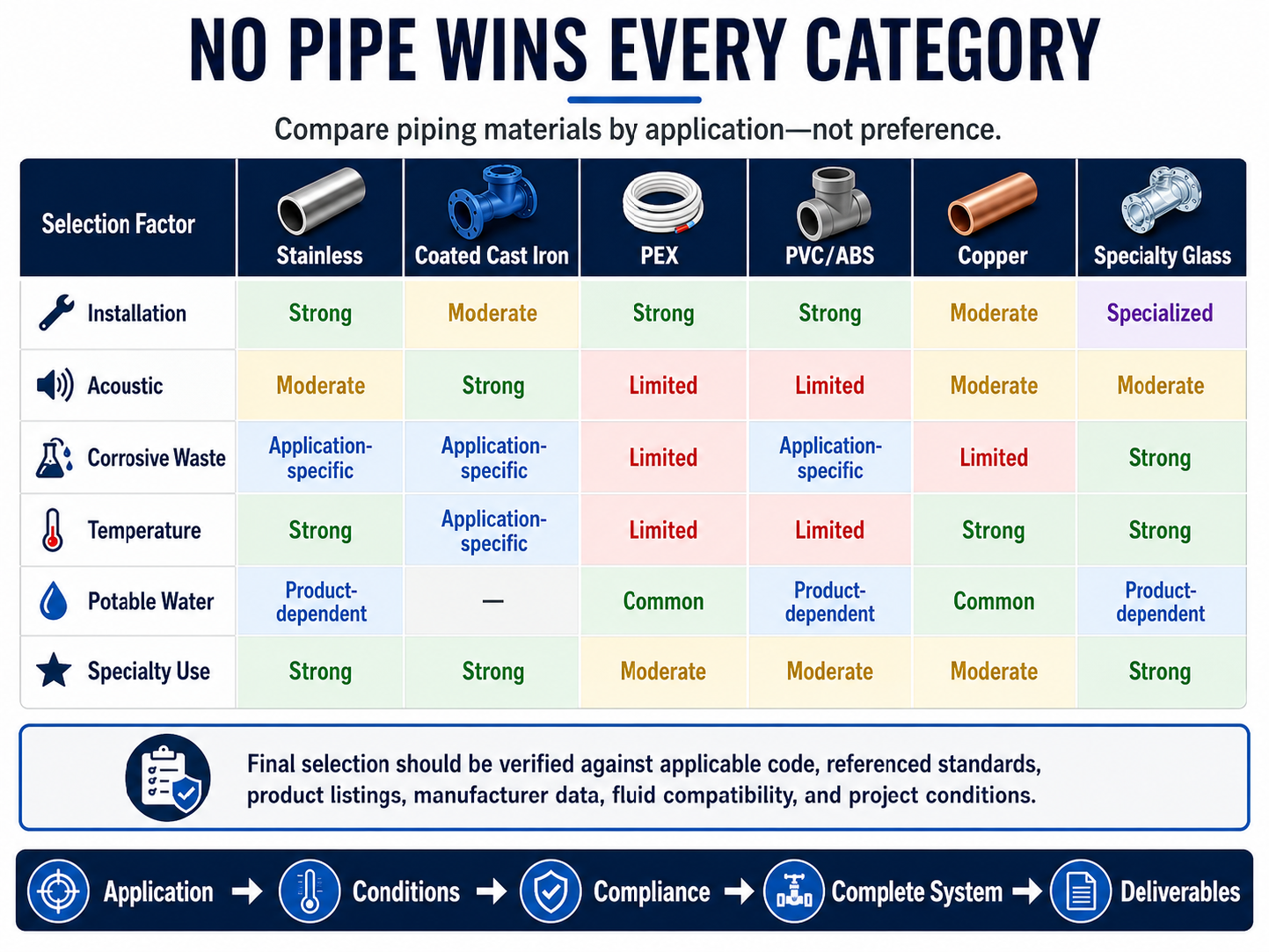
No Pipe Wins Every Category
Stainless steel may offer advantages for installation, corrosion resistance and specialized applications. Cast iron may be preferred where sound performance, rigidity and fire characteristics are important. PEX can provide flexible routing and reduced fitting counts in appropriate water-distribution applications. PVC and ABS can offer economical and efficient solutions for many drainage applications where permitted. Copper continues to serve numerous hot- and cold-water applications. Borosilicate glass remains a specialized option where chemical resistance and other project-specific characteristics are important. None of these observations makes one material universally superior.
The correct material is always application-dependent. Final selection should therefore be verified against:
Applicable code + referenced standard + product listing + manufacturer data + fluid compatibility + project conditions
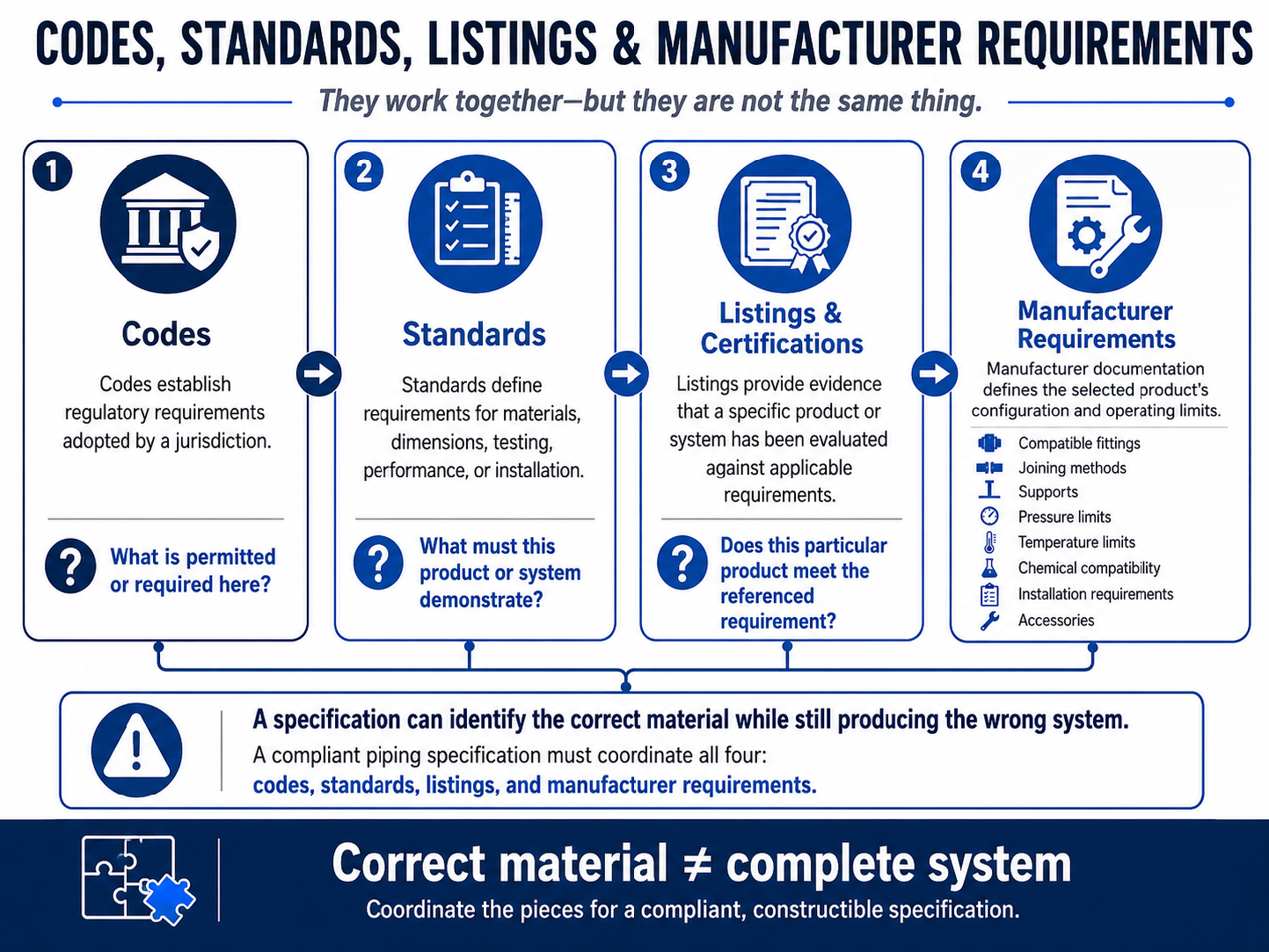
Codes, Standards and Listings Are Not the Same Thing
One source of specification complexity is that codes, standards, listings and manufacturer requirements frequently appear together, but they serve different roles. These layers are related but not interchangeable. A specification can identify the right material while still producing the wrong system if fittings, ratings, listings or installation requirements do not align.
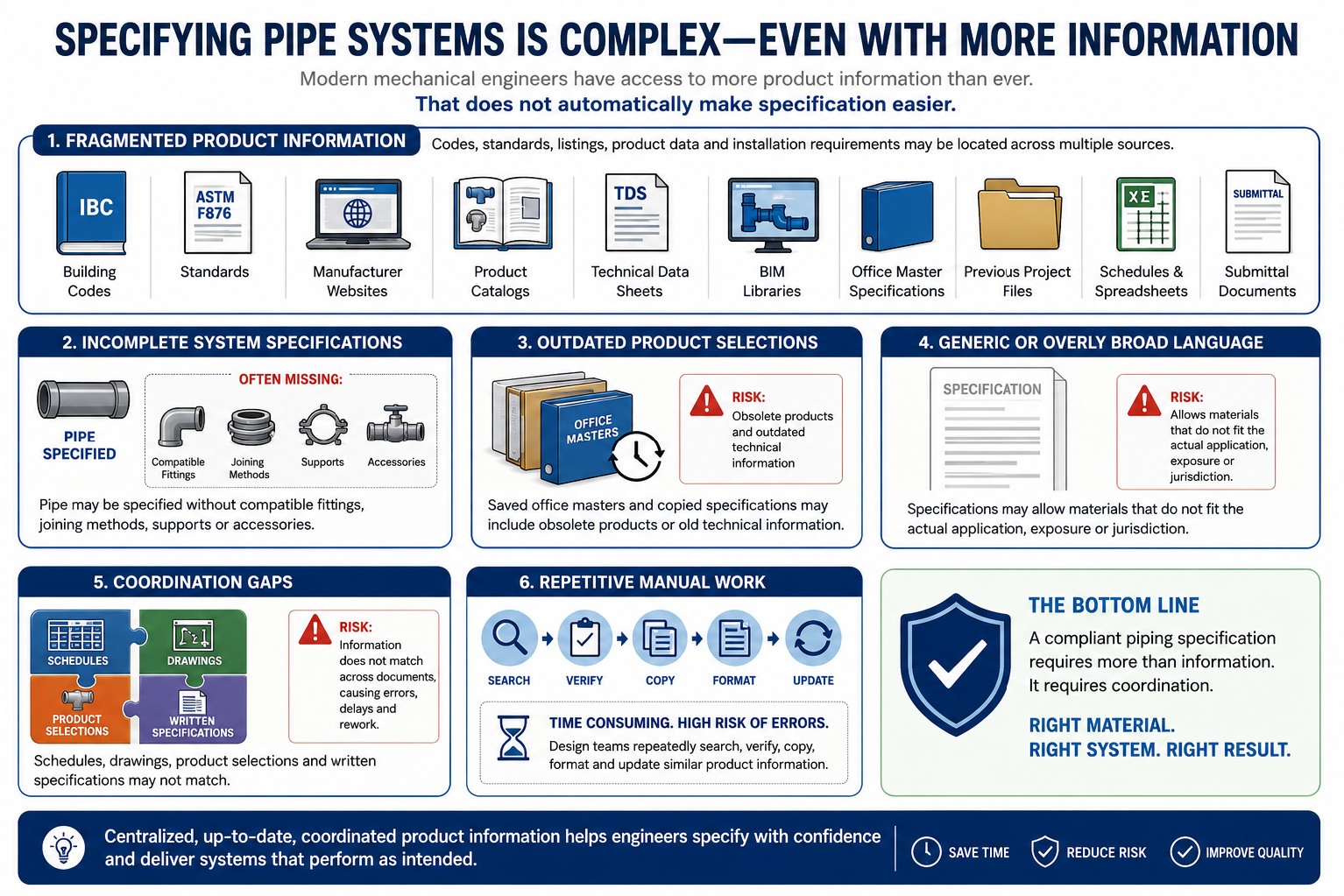
The Bigger Problem: Pipe Specifications Are Becoming Information Problems
Engineers now work across codes, standards, manufacturer data, BIM libraries, office masters, schedules and previous project documents. More information does not necessarily mean easier specification.
The real challenge is keeping that information current, compatible and coordinated from design intent through project documentation.
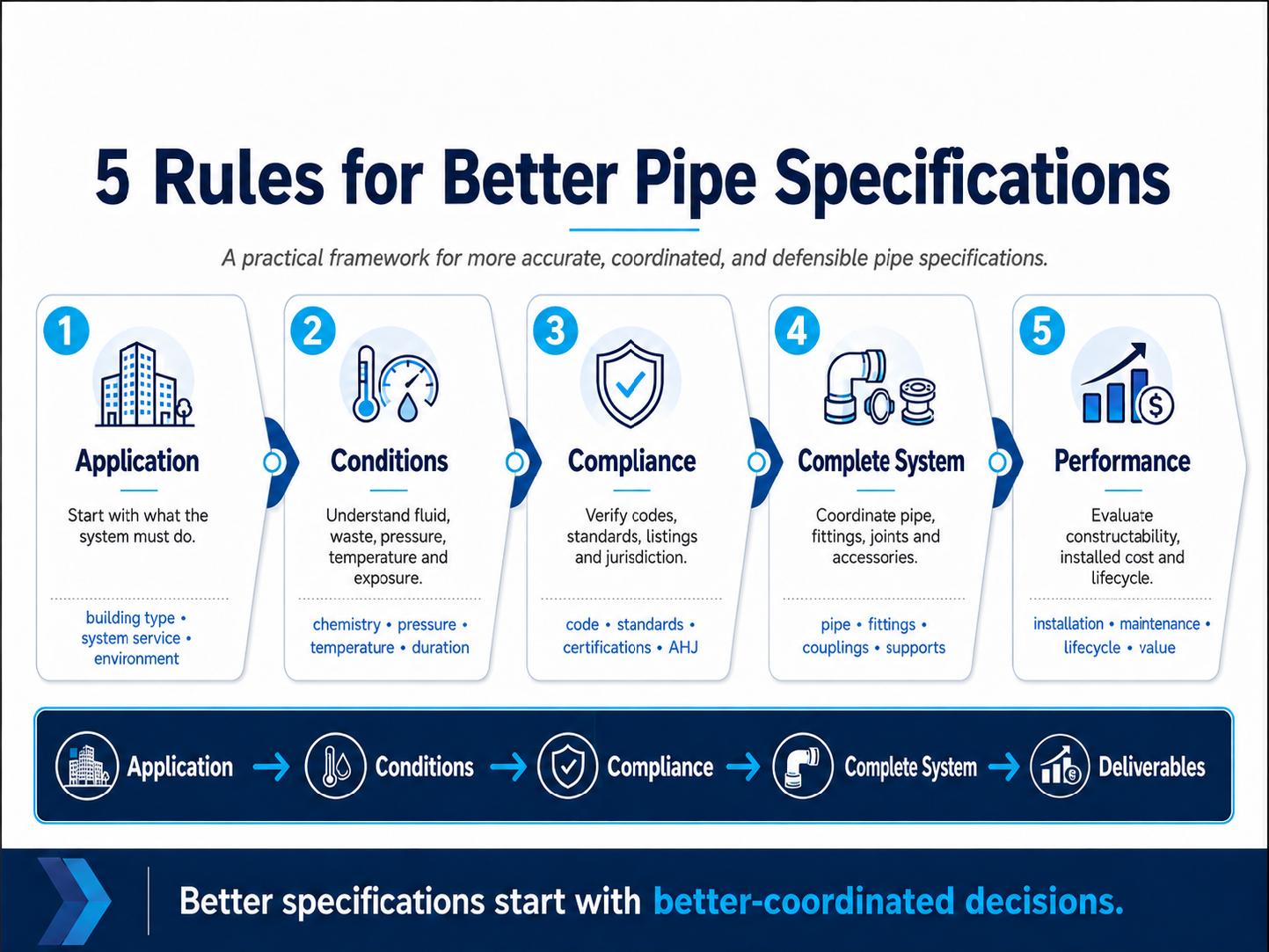
Five Rules for a Better Pipe Specification
The Pipe Webinar Series ultimately produced a useful framework for engineers and specification teams.
Where SpecTool Fits Into Modern Pipe Specification
As mechanical specifications become more data-intensive, engineers also need better ways to organize the information behind their design decisions.
That is the role ATS SpecTool is intended to support.
SpecTool is not a replacement for engineering judgment.
The engineer remains responsible for determining the application, design conditions, code requirements and suitability of the selected system.
Instead, SpecTool provides a digital specification environment for organizing and documenting those decisions more efficiently.
Code-Based Rules
Product configuration can incorporate manufacturer specifications and applicable building-code rules to help guide product selection.
Product Configurators
Manufacturer-approved configurations help engineers work with actual product options rather than generic descriptions alone.
Product Alternatives
SpecTool provides access to verified alternatives across hundreds of manufacturers, giving engineers another way to evaluate comparable product options while maintaining coordinated product information.
Automatic Product Updates
Centralized product information helps reduce the risk of specifications continuing to reference obsolete selections as manufacturer data changes.
Master Specifications
Engineering firms can develop and maintain master specification templates, improving consistency between projects and across design teams.
Multiple Deliverables
A coordinated selection can support outputs such as:
- CSI 3-Part specifications
- Long and short specifications
- Product schedules
- Project submittals
- Manufacturer specification sheets
- Revit content
- Product and environmental documentation
That matters because the value of digital specification is not simply generating a document faster.
The larger opportunity is connecting the design decision to the information that supports it.
From Static Specifications to Connected Project Intelligence
The next evolution of specification will likely involve even closer connections between structured product information and the rest of the project workflow.
We are already seeing the direction:
- Digitized manufacturer product data
- Automatic specification updates
- Product-specific environmental information
- Greater BIM coordination
- Prefabrication and coordinated installation
- Manufacturer-approved system configurations
- Digital firm masters
- Connected specification and procurement workflows
In this environment, a specification becomes more than a static document produced at one stage of design.
It becomes a structured source of project intelligence.
That is particularly valuable in building systems, where a seemingly simple material decision can affect code compliance, chemical compatibility, installation, fittings, supports, accessories, maintenance and downstream project documentation.
The Lesson Below the Surface
The most important takeaway from the ATS University Pipe Webinar Series is not that engineers should specify more stainless steel, more PEX, more cast iron or any other single material.
It is exactly the opposite.
No pipe wins every category.
The better question is:
What system best satisfies this application’s requirements?
That answer requires an understanding of:
- Application
- Operating conditions
- Codes
- Standards
- Listings
- Manufacturer requirements
- Complete-system compatibility
- Installation
- Lifecycle expectations
And as the amount of information behind those decisions continues to grow, the specification process itself must evolve.
Better pipe specifications begin with better engineering decisions.
Better engineering decisions become easier to execute when the information behind them is connected.
Key Takeaways
- Start with the application, not a preferred material.
- Treat pipe, fittings, joints and accessories as one system.
- Distinguish between codes, standards, listings and manufacturer requirements.
- Evaluate total installed value rather than material cost alone.
- Verify chemical and operating compatibility for specialty waste systems.
- Keep specification information current and coordinated across project deliverables.
- Use digital tools to support engineering judgment, not replace it.
Build Your Next Pipe Specification in SpecTool
From pipe and fitting selection to standards-based filtering, product alternatives, project schedules and complete specification outputs, ATS SpecTool helps mechanical engineers move from design decision to coordinated project documentation in one specification environment.
Create your free SpecTool account and start building your next piping specification.
Also explore the full ATS University Pipe Webinar Series to go deeper into:
- Push-Fit Stainless Steel Drainage with BLÜCHER / Watts
- Corrosive Waste Design, Compliance & Neutralization with SMS
- PEX Applicable Codes & Standards with RWC
- Cast Iron Coatings for Aggressive DWV Applications with Charlotte Pipe
- Below the Surface: Cracking the Code on Commercial & Residential Piping with ATS Software
Share this article
