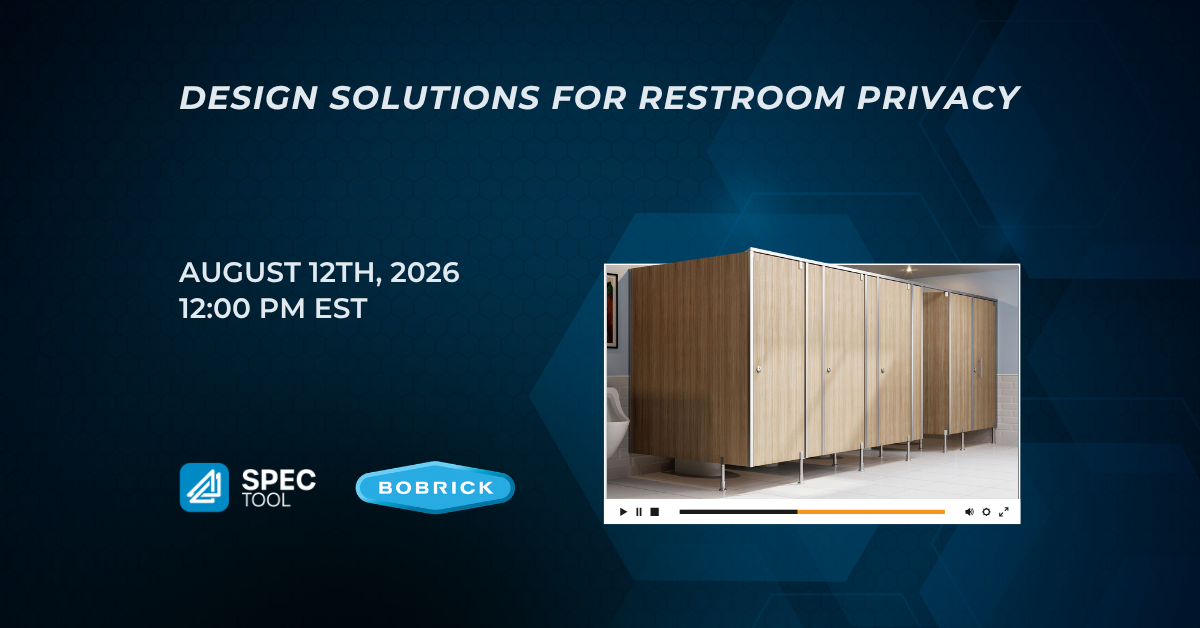
Design Solutions for Restroom Privacy with Bobrick

Chapter 1: Introduction & Accreditation
- The course is accredited for professional continuing education by AIA and IDC, and offers both certificates of attendance and links for formal accreditation submission .
- The session introduces restroom privacy as a key design topic in today’s commercial architecture .
- The course objectives are understanding privacy factors, design solutions, and cost considerations regarding toilet compartments .
Chapter 2: Factors Influencing Restroom Privacy
- Privacy has become an essential expectation in restroom design, shaping policy and building standards .
- Design solutions must address varied user needs, including accessibility and comfort in non-residential settings .
- Codes and standards related to HVAC and fire suppression also impact privacy solution design .
Chapter 3: Partition Design Solutions & Levels of Privacy
- Standard toilet compartments have 58-inch high panels and doors with 12 inches at the floor, offering basic privacy .
- Increased or extended height compartments deliver greater privacy, especially preferable for all-gender and gendered restrooms .
- Individual compartments with lavatories provide high privacy but are generally space- and cost-inefficient for typical capacity expectations .
Chapter 4: Cost-Benefit Analysis & Construction Considerations
- Cost-benefit analysis must weigh space, budget, and construction complexity, especially considering plumbing and multiple trades involvement .
- Higher privacy solutions can drive up costs due to additional materials and required labor .
- Designers must balance increased privacy against efficient use of space, budget constraints, and practical construction challenges .
Chapter 5: Accessibility Compliance
- Privacy solutions should be designed with accessibility standards and occupant desires in mind .
- Accessibility compliance is vital for toilet partition and cubicle design in both new builds and renovations .
- Integrating privacy and accessibility ensures inclusivity and legal compliance in restroom environments .