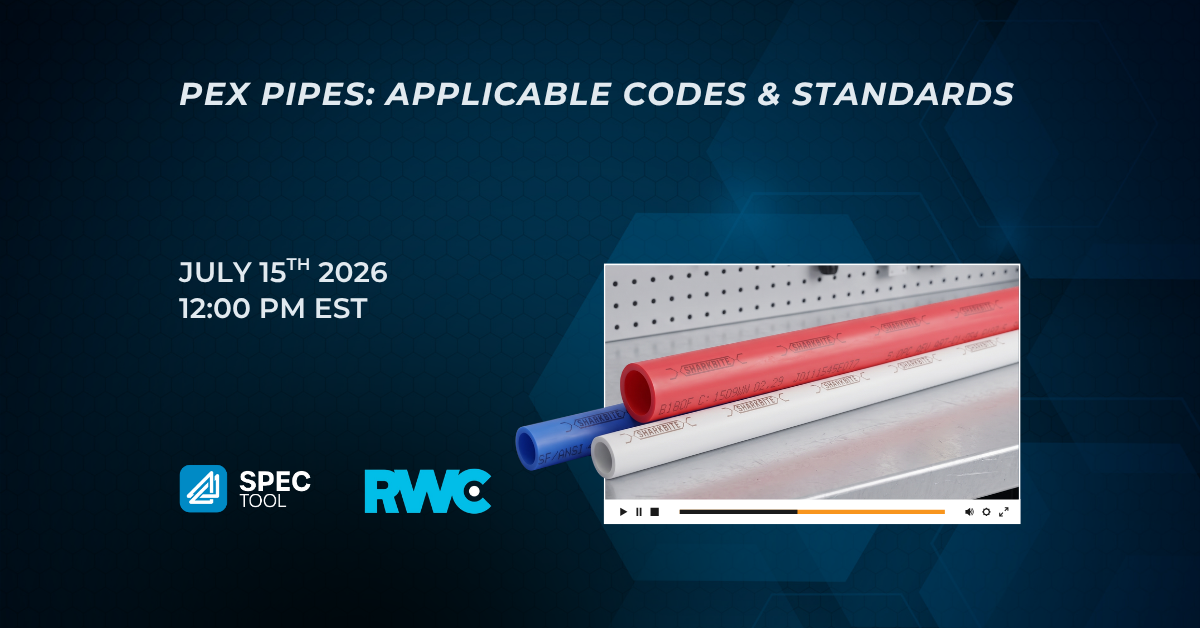
PEX Pipe: Applicable Codes and Standards with RWC
Chapter 1: Introduction to PEX Pipe Standards
- Explains what PEX (cross-linked polyethylene) piping is and why code compliance matters in plumbing systems.
- Discusses how plumbing codes and product standards help ensure safety, durability, and consistent installation practices.
- Introduces the major organizations involved in regulating PEX systems, including ASTM, CSA, and model plumbing code bodies.
Chapter 2: Key Codes and Certifications
- Outlines the primary plumbing codes that govern PEX installations, such as the IPC (International Plumbing Code) and UPC (Uniform Plumbing Code).
- Highlights important product certifications, including NSF and ASTM testing standards, as essential for approval and performance verification.
- Emphasizes checking local jurisdiction requirements because code adoption can vary by region.
Chapter 3: Installation Requirements and Best Practices
- Reviews proper installation methods, including bend radius limits, support spacing, and expansion/contraction considerations.
- Explains the importance of using approved fittings and connection systems that match manufacturer specifications.
- Covers common installation mistakes that can lead to leaks, failures, or code violations.
Chapter 4: Safety, Performance, and Compliance
- Covers how PEX piping is tested for pressure, temperature resistance, and long-term reliability before market approval.
- Includes potable water safety standards and how certified PEX products protect water quality.
- Presents compliance documentation and visible product markings as important tools for inspectors and installers.
Chapter 5: Industry Applications and Final Guidance
- Reviews common PEX applications, including residential plumbing, radiant heating, and retrofit projects.
- Encourages installers to stay current with evolving codes, manufacturer updates, and training opportunities.
- Reinforces that following applicable standards improves system longevity, safety, and inspection success.