Corrosive Waste: Design, Compliance, and Neutralization Systems with SMS Ltd.
Chapter 1: Introduction to ATS and Industry Standards
- ATS Selection Tools: ATS is a free, online product configuration tool designed for engineers, architects, and contractors to build exact, model-specific product specs with all necessary suffixes.
- Deliverable Formats: The tool provides around 10 different scannable deliverables—including written specs, Excel schedules, PDF submittals, and Revit files—that seamlessly integrate into existing workflows.
- Continuing Education: The webinar serves a technical purpose rather than a sales pitch, offering professional development hours that can be self-reported in provinces like Ontario and British Columbia.
Chapter 2: Plumbing Codes for Corrosive Waste Piping
- Strict Certification Requirements: Under Canadian codes (such as the Ontario Building Code), plumbing systems handling acid or corrosive waste must be suitable for the purpose and explicitly certified to listed standards like CSA B181.3 for plastics.
- Independent Venting Systems: Corrosive waste vents must be entirely separated from standard sanitary vents to prevent corrosive vapors from recondensing downstream and destroying standard copper or cast iron piping.
- Vent Line Sizing: The minimum vent sizing for any local sewage sump or dilution tank is 2 inches, and even for the largest central systems, it does not need to exceed 4 inches.
Chapter 3: Comparing Piping Materials and Limitations
- The Death of DurIron: High silicon iron castings (historically known as DurIron) were the century-old standard for corrosive waste, but the product was discontinued in 2016 and should be removed from master specifications.
- Glass and Combustibility Rules: Borosilicate glass is non-combustible, making it the only viable choice for corrosive waste in vertical shafts where combustible plastics are strictly banned by building code regulations.
- Polypropylene Provisos: Polypropylene is highly cost-effective and chemically resistant, but because it is combustible, code requires the building to be fully sprinklered and equipped with certified firestops wherever it is installed.
Chapter 4: Sizing Passive and Active Neutralization Systems
- The Logarithmic Dilution Myth: Because pH is a logarithmic scale, neutralizing one liter of a highly acidic (pH 1) chemical using water alone would require a wasteful one million liters of water; thus, dedicated neutralization systems are required.
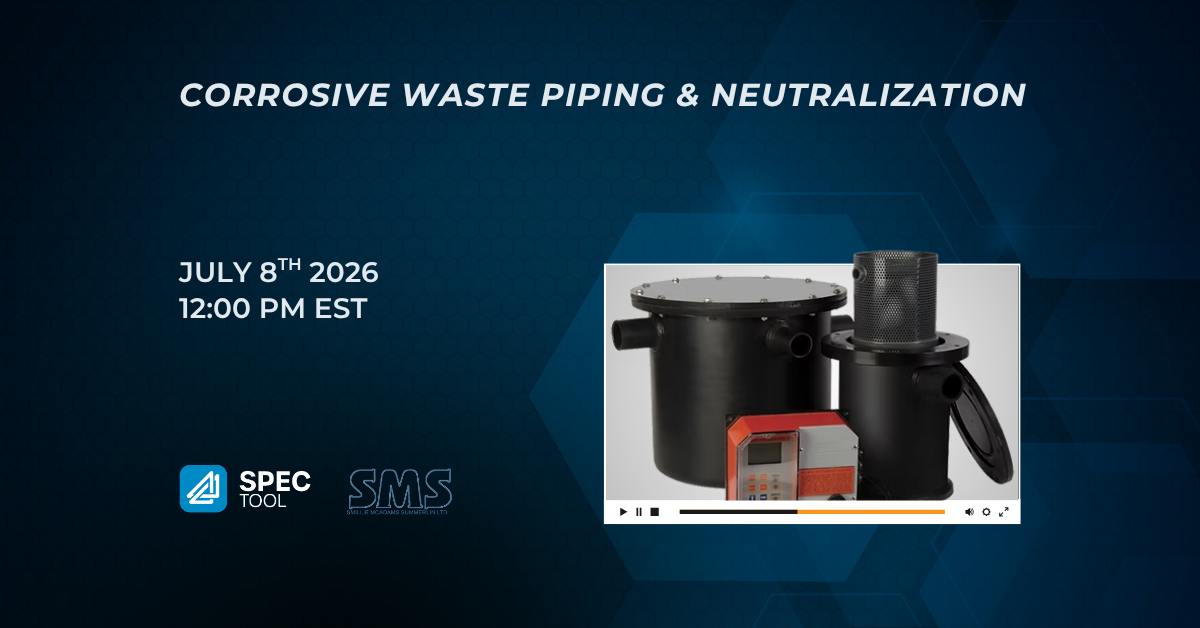
- Passive Sizing Rule of Thumb: Passive limestone tanks are sized based on a minimum retention rate of one gallon per hour per fixture unit, factoring in a 50% volume displacement penalty caused by the stone aggregate itself.
- Active Injection Calculations: For larger or complex systems, active injection systems use dosing pumps, agitators, and pH probes, and are sized using code-defined formulas based on whether the facility has more or less than 260 fixture units.
Chapter 5: System Construction, Constraints, and Maintenance
- The Critical Dip Tube: Neutralization tanks require an internal “dip tube” to force effluent to percolate up through the limestone bed rather than creating a laminar flow that bypasses the media entirely.
- Physical and Traffic Limitations: Specifiers must account for pedestrian or traffic load ratings for below-grade tanks, and always verify that the outer diameter (plus top flanges) can actually fit through the building’s physical door openings.
- Interceptors and Clog Prevention: An acid waste system must be viewed as a cohesive package that includes an upstream solids interceptor to catch broken glass, pipette tips, and litmus paper before they clog the main tank.